
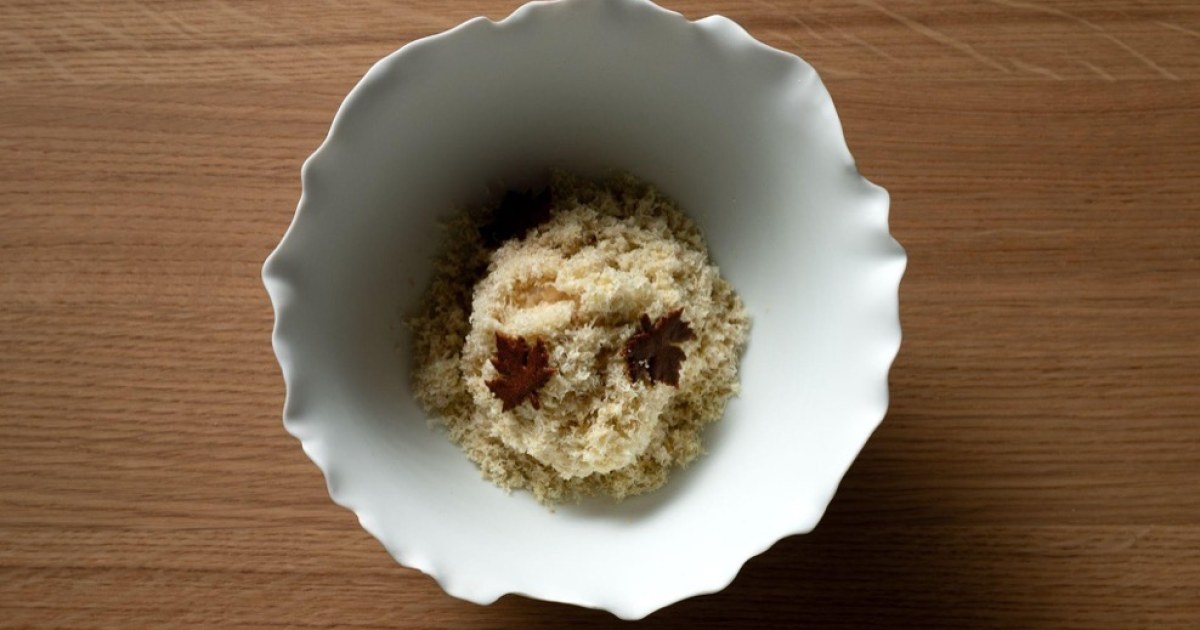
Gula melaka brings a distinctive depth to waguri chestnut. Its caramelised sweetness and smoky notes complement the chestnut’s earthy character, while praline adds a different kind of sweetness and texture.
Japanese technique and French culinary traditions form the foundation of our cuisine. Yet there is another influence running through the menu: the herbs, fruits, spices and sugars of Southeast Asia, used alongside Japanese ingredients and with an appreciation for the character each brings to a dish.
At Loca Niru, the question is not simply how to combine three culinary traditions. It is how to make their ingredients work together with clarity and purpose.
Why Regional Produce Belongs on Our Menu
In Japanese cooking, the concept of shun describes an ingredient at its seasonal peak. It reflects an approach to cooking that pays attention to the changing character and availability of ingredients throughout the year.
For Loca Niru, this sensibility extends naturally to the region around us. Singapore’s location gives the kitchen access to Southeast Asian produce with its own distinct flavours, textures and seasonal rhythms. These ingredients can complement Japanese seafood and produce while introducing a sense of place to the menu.
Chef Shusuke Kubota has built this regional perspective into Loca Niru’s approach from the beginning. The restaurant’s combination of Japanese sensibility, French technique and Southeast Asian ingredients was also noted by The Peak when Loca Niru opened.
The result is not a separate regional theme layered onto the tasting menu. It is an approach in which each ingredient earns its place through what it contributes to the finished dish.
Where Southeast Asian Ingredients Meet the Autumn Menu
Regional ingredients appear across several courses of the current dinner menu, taking different roles depending on the dish. The following examples illustrate how the kitchen approaches these combinations; preparations may change as the menu evolves.
- Kuma ebi with curry leaf and key lime: Green tiger prawn is paired with garlic sabayon, with curry leaf providing an aromatic note and key lime bringing brightness to the richness of the sauce.
- Samegarei with Nyonya-inspired beurre blanc: Roughscale flounder is served alongside a French butter sauce informed by Peranakan flavours, bringing regional aromatics into a classical French preparation.
- Shine muscat and kedondong: Sweet, fragrant Japanese grapes meet kedondong, also known as ambarella, whose tart fruit character introduces contrast and freshness.
- Waguri chestnut with gula melaka: Japanese chestnut is paired with palm sugar, praline and vanilla, bringing together earthy, caramelised and toasted flavours in the dessert.
Each combination approaches the same question differently. Sometimes a regional ingredient provides acidity; elsewhere, it contributes fragrance, sweetness or a more savoury dimension. Its role depends on the ingredient it accompanies and the balance the dish needs.
The Importance of Restraint
Combining ingredients from different culinary traditions requires more than choosing flavours that work well together. Intensity matters, as does the way an ingredient behaves within a dish.
Curry leaf, for example, can bring a vivid aromatic quality to seafood. Used with care, it complements the prawn without obscuring its natural sweetness. Gula melaka offers another kind of challenge: its depth can enhance chestnut, but too much sweetness can distract from the ingredient it is meant to accompany.
The work lies in finding the balance. The quantity, preparation and supporting ingredients all influence how the final dish tastes, and small adjustments can change the relationship between its components.
This is where small adjustments make a big difference in fine dining, and it is the kind of precision diners look for when choosing an Orchard MICHELIN star restaurant. Rather than asking every ingredient to announce itself, the kitchen considers how each one contributes to the whole. Ideally, the result feels natural on the plate. The diner encounters a prawn with a well-balanced sauce, or a chestnut dessert with greater depth, while the ingredients behind that balance remain available to discover.
A Menu Shaped by Where It Is Cooked
Seasonal menus change as ingredients become available and their character shifts throughout the year.
Cooking in Singapore means working with the ingredients of this part of the world as well as those sourced from Japan and elsewhere. At Loca Niru, that is an opportunity to bring different culinary traditions into conversation, guided by Japanese sensibility and French technique.
Reserve a table at Loca Niru to experience it for yourself.