
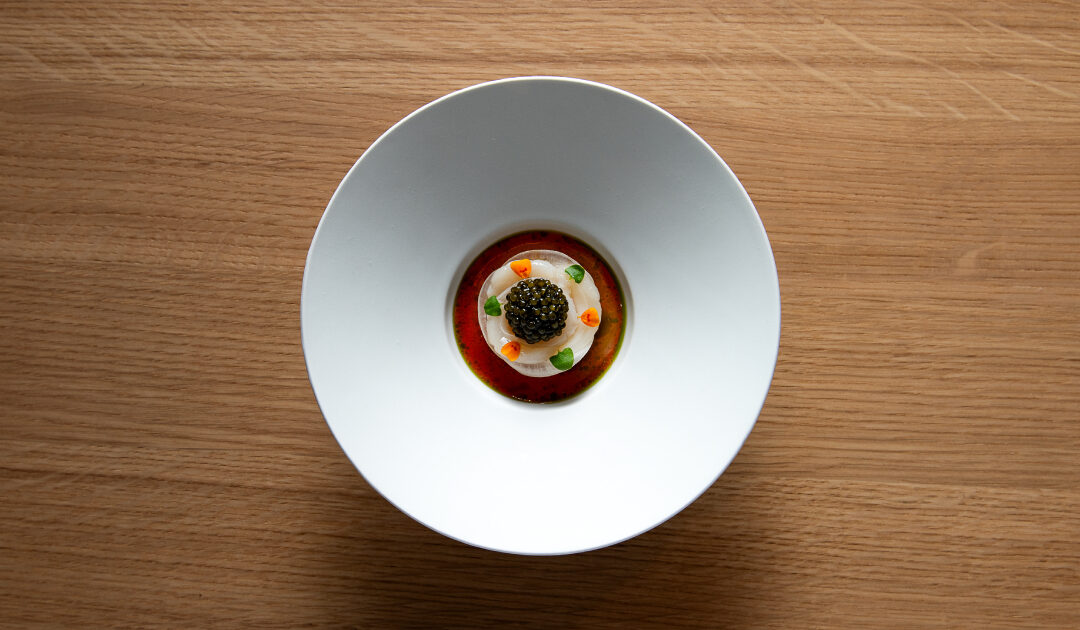
There is a quiet philosophy at the heart of Japanese cooking that does not always make it onto the menu description. It is the idea that a dish should reflect the season in which it is served. Not as a marketing decision. Not as a creative flourish. But as a genuine belief that the best ingredients have a peak, and that peak deserves to be honoured.
This is what separates truly seasonal menus from ones that simply rotate ingredients on a schedule. Modern Japanese cuisine in Singapore, at its best, treats seasonality as a foundation rather than a feature. At Loca Niru, that foundation is visible from the very first course, with each menu built around what Japanese produce is doing at a specific moment in the year.
In Japanese fine dining, value is not defined by abundance but by timing. When ingredients are used at their seasonal peak, the entire structure of a menu changes.
Japan’s Four Seasons and the Language of Ingredients
Japan’s four seasons each bring a distinct culinary identity.
Spring is marked by delicate shellfish and young vegetables, offering freshness and subtle sweetness. Summer tends toward lighter preparations that highlight clarity and brightness. Autumn introduces richer flavours such as mushrooms, root vegetables, and more developed fish. Winter, in contrast, brings depth, warmth, and umami-driven dishes suited to slower techniques.
These seasonal shifts are not interchangeable. Each period carries its own character, and ingredients are understood within that context. For chefs, this becomes a framework for composition rather than a list of available produce.
How Seasonal Tasting Menus Are Built
A menu built around Japanese seasonality is not simply a list of dishes that changes four times a year. The sourcing often begins weeks in advance. Chefs work closely with suppliers in Japan to understand when specific produce peaks, and at what point that window begins to close.
Once the ingredients arrive, the cooking tends to follow their lead rather than imposing a style onto them. This approach can be understood through a few guiding principles. Ingredients are presented with minimal interference, allowing their natural character to remain at the centre of the dish. Supporting elements are chosen to enhance rather than dominate. Techniques such as fermentation or precise seasoning are used to add depth, but never to obscure the primary ingredient. Even flavour accents from other regions are applied sparingly, ensuring they remain in support rather than in focus.
The result is a style of cooking that prioritises responsiveness. The kitchen adapts to the ingredient, rather than forcing the ingredient to conform to a fixed idea.
Interpreting Japanese Seasonality in Singapore
Singapore sits outside Japan’s seasonal calendar, which means the ingredients have to travel. That is not a disadvantage. It is simply a different kind of challenge. Restaurants that do this well build supplier relationships that allow them to source at the right moment and adjust when something is not at its best.
A dish built around a cherry blossom trout caught at peak season in Japan, plated thoughtfully in Singapore, carries a precision that a static menu cannot replicate. At Loca Niru, this is reflected in the way Chef Shusuke Kubota structures each menu, working around what the season is offering rather than what is convenient to plan around.
Experience a Seasonal Japanese Tasting Menu at Loca Niru
At Loca Niru, this philosophy is expressed through a menu that changes with the seasons, offering a dining experience grounded in restraint, clarity, and respect for ingredients at their peak. Reserve your table at Loca Niru today to experience a menu shaped entirely by the season.