
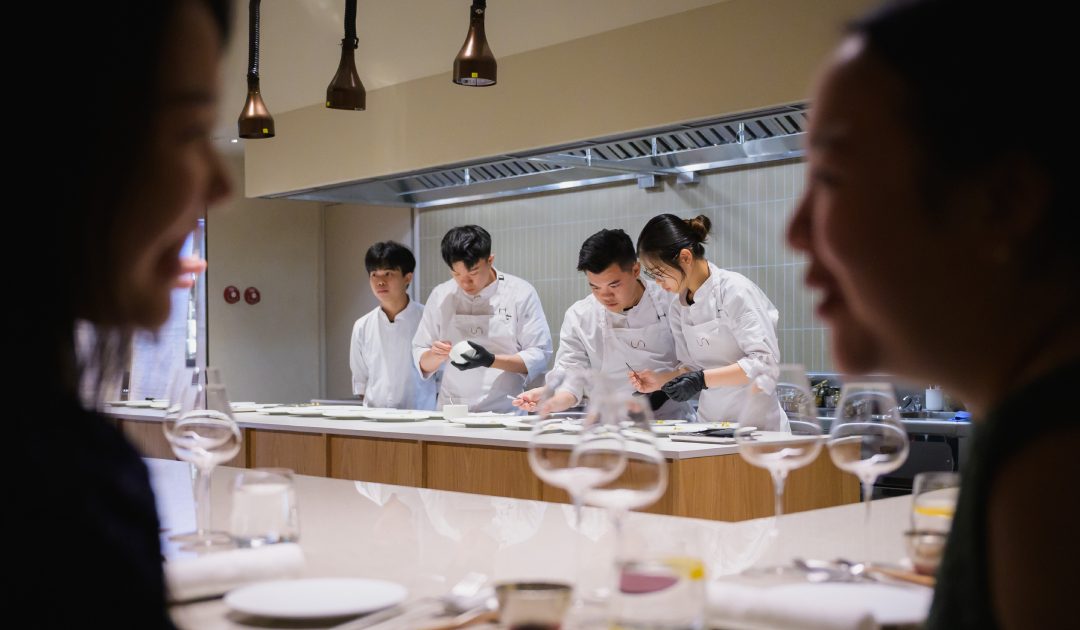
Some diners think the best dishes come from years of perfecting one signature recipe. But many exciting ideas are born differently—through testing, kitchen conversations, and chefs bouncing ideas off each other during service.
This is where chef collaboration comes in.
In Singapore’s dining scene, especially among tasting menu restaurants, collaborations have become increasingly common.
What Is Chef Collaboration?
Chef collaboration refers to two or more chefs working together to create a shared dining experience. Instead of one head chef designing the entire meal, multiple chefs contribute ideas, techniques, or dishes.
This can take different forms:
- 4-hands dinners (two chefs co-creating a tasting menu)
- Guest chef takeovers
- Pop-up collaborations
- Seasonal menus developed jointly
The key difference is involvement. A true collaboration means both chefs are actively shaping the menu, not just lending their name to an event.
How Shared Kitchens Spark New Ideas
Even experienced chefs develop habits. They season a certain way. They plate dishes with familiar structure. They rely on techniques they trust.
When another chef steps into the same kitchen, those habits are questioned. In a shared environment, chefs naturally exchange perspectives on flavour balance, sauce building, ingredient pairings, or plating styles.
One chef might introduce a different way to treat seafood. Another might suggest adjusting acidity or texture to sharpen a dish.
These exchanges often lead to subtle but meaningful refinements. Sometimes they even inspire entirely new directions.
For diners, that creative tension is what makes collaboration menus feel fresh.
What Is a 4-Hands Dinner?
The concept is simple: two chefs work side by side to design and execute one cohesive tasting menu. Both are involved in planning, testing, and service.
It is called “4-hands” because it symbolises partnership. It is not about competition or separate showcases. The goal is a unified menu that flows naturally from start to finish.
A proper 4-hands dinner usually includes:
- A shared menu concept or theme
- Joint menu planning and tastings
- Courses designed to complement one another
- Both chefs present in the kitchen during service
Unlike a standard tasting menu, which reflects one chef’s perspective, a 4-hands menu blends two culinary viewpoints into a single experience.
Why Collaboration Menus Feel More Special
Most restaurants have a stable menu for consistency. That reliability matters, but it also means regular guests know what to expect.
Collaboration dinners are different because they are temporary. Many run for only a few nights, and the dishes may never return.
This limited-time nature encourages chefs to experiment. They may explore ingredients they do not typically use or create dishes that are too intricate for everyday service.
For diners, this often results in a meal that feels more dynamic and unexpected than a standard offering.
Why Japanese Cuisine Works Well in Collaborations
Japanese cuisine often plays a strong role in modern collaborations because of its precision and seasonal focus.
Its foundations emphasise clean flavours, careful knife work, broth layering, and ingredient integrity. These qualities make it highly adaptable when paired with other culinary influences.
Modern Japanese cuisine in Singapore has evolved beyond traditional formats into creative tasting menus and cross-cultural interpretations. When Japanese fundamentals meet another chef’s perspective, the result often feels balanced, refined, and intentional.
Conclusion
When chefs collaborate, the result is often more than the sum of its parts. Shared kitchens spark new ideas, challenge familiar techniques, and produce menus that feel distinctive.
If you enjoy modern dining experiences, book a table at Loca Niru today and experience our seasonal creations for yourself. For the latest menu highlights, chef collaborations, and upcoming event updates, follow Loca Niru on Instagram and Facebook and stay connected with what’s next.